Makes 12 scones
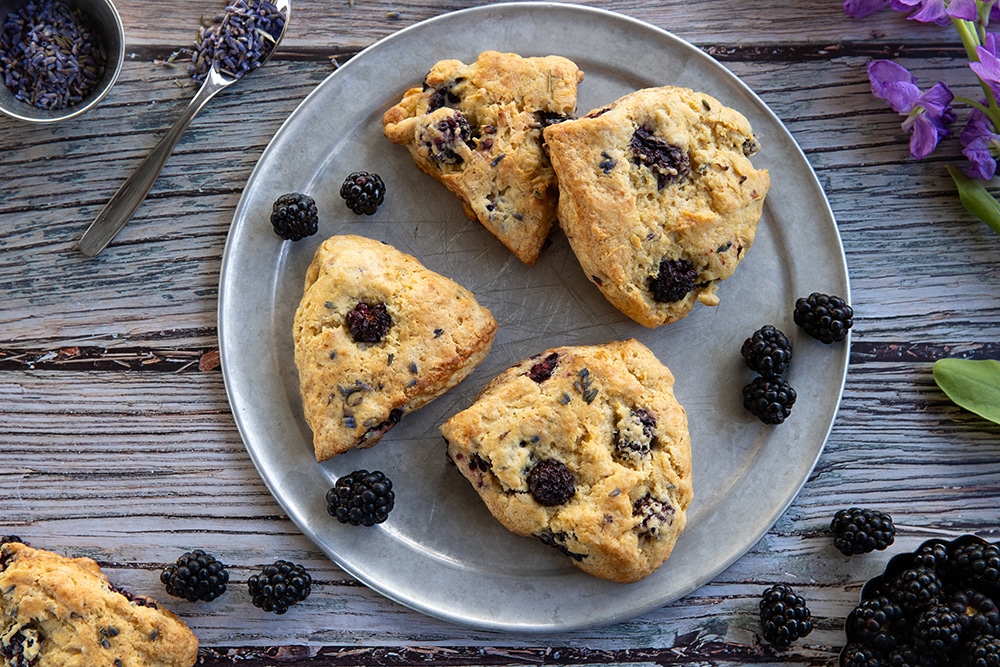
Photo by Hannah Kaminsky
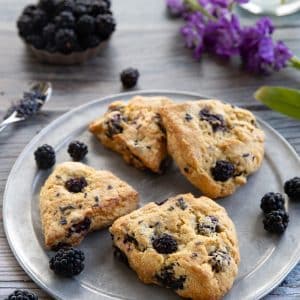
These blackberry lavender scones are basically muffins with whimsy. Lavender does that to baked goods, it takes something familiar and makes it feel a little more dreamy and a little more special with just a lil pinch of flowers. One bite and it feels like you’re eating scones in a thicket somewhere.
Scones in general are one of the simplest baked goods you can make, which is probably why they show up in so many cozy breakfast spreads and bakery cases. A good scone should be tender inside, lightly crisp on the edges, and just crumbly enough that you want to break it open while it’s still warm.
For those vegan scones, coconut oil is the secret to the buttery texture. When it’s cut into the flour it creates those soft little pockets that give scones their classic crumb. It melts into the dough as they bake and adds a richness that works beautifully with fruit. The result is a vegan scone that still feels buttery and satisfying.
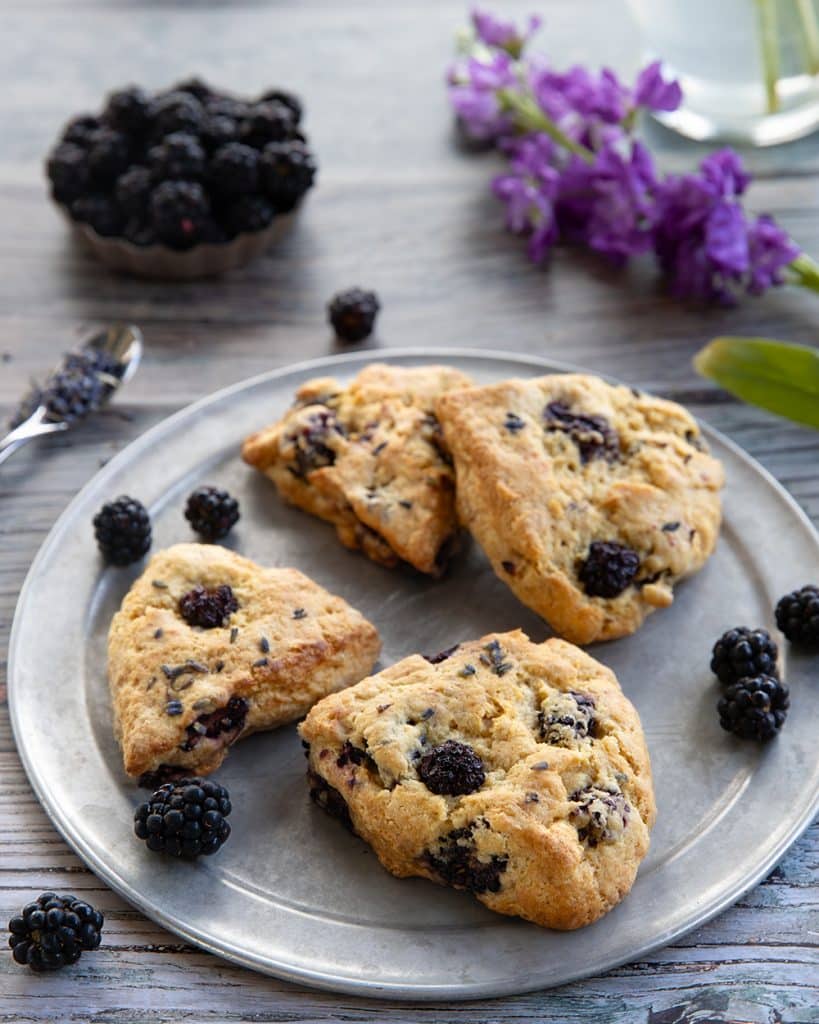
Fresh blackberries burst into the dough as they bake, adding little pockets of jammy sweetness, while the lavender perfumes everything just enough to make the whole batch feel a little magical. Not overly floral, but enough to make you pause for a second and think, oh, this is nice.
The dough comes together fast. Coconut oil gets cut into the flour, the berries get folded in, and the dough is shaped into two disks that are sliced into triangles. If you don’t feel like shaping, you can make drop scones instead. Just scoop the dough onto the baking sheet and bake. They won’t have the classic triangle look but they taste exactly the same.
Use fresh blackberries here if you can. Frozen berries add extra moisture to the dough, which means the scones take longer to bake and don’t get as golden on top. Fresh gives you the best texture and color.
If you can’t find culinary lavender, chopped fresh rosemary is a surprisingly good swap. It gives these vegan blackberry lavender scones an earthy, herby quality that works really well with blackberries. And if you want a little extra brightness, add a teaspoon of lemon zest to the dry ingredients. Not required, but a nice touch.
Whether you’re having a vegan tea party or just a little morning snack, these scones will fit right in!
Vegan Blackberry Lavender Scones FAQ
Can I use frozen blackberries in scones? You can, but fresh is better here. Frozen berries (obviously) make the dough colder and release extra moisture into the dough, which means the scones take longer to bake and won’t get as golden on top. I would do wild blueberries if you’re using frozen berries, since they’re small and don’t affect the dough as much.
What if I can’t find culinary lavender? Chopped fresh rosemary is a surprisingly good swap. It gives the scones an earthy, herby quality that pairs really well with blackberries. Start with about a teaspoon.
What’s the difference between culinary lavender and regular lavender? Culinary lavender is food-grade and meant to be eaten. Don’t use lavender from a craft store or garden center unless you know it hasn’t been treated with pesticides. Look for it in the spice aisle or order it online.
Can I add lemon zest to vegan blackberry lavender scones? Yes. A teaspoon of lemon zest added to the dry ingredients gives the scones a nice brightness. Not required but recommended.
How do I add chocolate to these? Yes, we need a way to work chocolate into everything. Fold in about ¾ cup vegan chocolate chunks along with the blackberries for a chocolate berry scone, or skip the berries entirely and go full chocolate chunk. Both are great with the lavender.
Can I make drop scones instead of cutting triangles? Yes. Just use an ice cream scoop to portion the dough onto the baking sheet and bake as directed. They won’t have the classic triangle look but they taste exactly the same.
Can I use a different fresh berry? Of course. Blueberries, raspberries, or diced strawberries all work. Raspberries are especially good with the lavender.
Can I make these ahead of time? Yes. Bake them, let them cool completely, and store in an airtight container for up to 2 days. Reheat in a 300°F oven until warm. They’re best the day they’re made but still good the next morning.
Can I freeze these? Yes. Freeze cooled scones in an airtight container for up to a month. Reheat from frozen in a 325°F oven until warmed through.
Can I use vegan butter instead of coconut oil? Yes. Use the same amount of cold vegan butter, cut into small cubes. The scones will taste a little more buttery, and a little more salty (you can use a little less salt if you want).
Why do I need the apple cider vinegar? The vinegar mixed with the nondairy milk creates a vegan buttermilk. The acid reacts with the baking powder to help the vegan blackberry lavender scones rise and gives them a tender crumb.
Why refined coconut oil? Refined coconut oil has a neutral flavor, so it won’t make your scones taste like coconut. Unrefined (virgin) coconut oil has a stronger coconut flavor that can compete with the lavender and berries. Either will work structurally, but refined keeps the taste clean.
More Vegan Sweet Treats To Try:


Blackberry Lavender Scones

Ingredients
- 1¼ cups unsweetened soy milk or your favorite nondairy milk
- 1 tablespoon apple cider vinegar
- 3 cups all-purpose flour
- ½ cup granulated sugar
- 2 tablespoons baking powder
- ½ teaspoon salt
- 1½ teaspoons dried culinary lavender
- ½ cup refined coconut oil
- 1½ teaspoons pure vanilla extract
- 2 cups fresh blackberries
Instructions
- Preheat the oven to 375°F. Lightly grease a large rimmed baking sheet.
- In a measuring cup, whisk together the milk and apple cider vinegar and set aside to curdle.
- Combine the flour, sugar, baking powder, salt, and lavender in a large mixing bowl. Add the coconut oil in small clumps, then use your fingers or a pastry cutter to cut it into the flour until the flour texture becomes pebble-like.
- Create a well in the center and add the milk mixture and vanilla. Mix with a wooden spoon until about half of the flour is incorporated. Fold in the blackberries and mix until all the ingredients are just moistened, taking care not to overmix.
- Place a piece of parchment on the counter. Divide the dough into two blobs. Shape each blob into a disk, roughly 8 inches in diameter. Using a sharp knife, cut one disk in half. Then cut each of those halves into thirds, so that you have 6 cute triangles. Transfer the triangles to a baking sheet, then repeat with the other blob of dough.
- Bake until the tops are lightly browned and firm to the touch, 22 to 26 minutes.